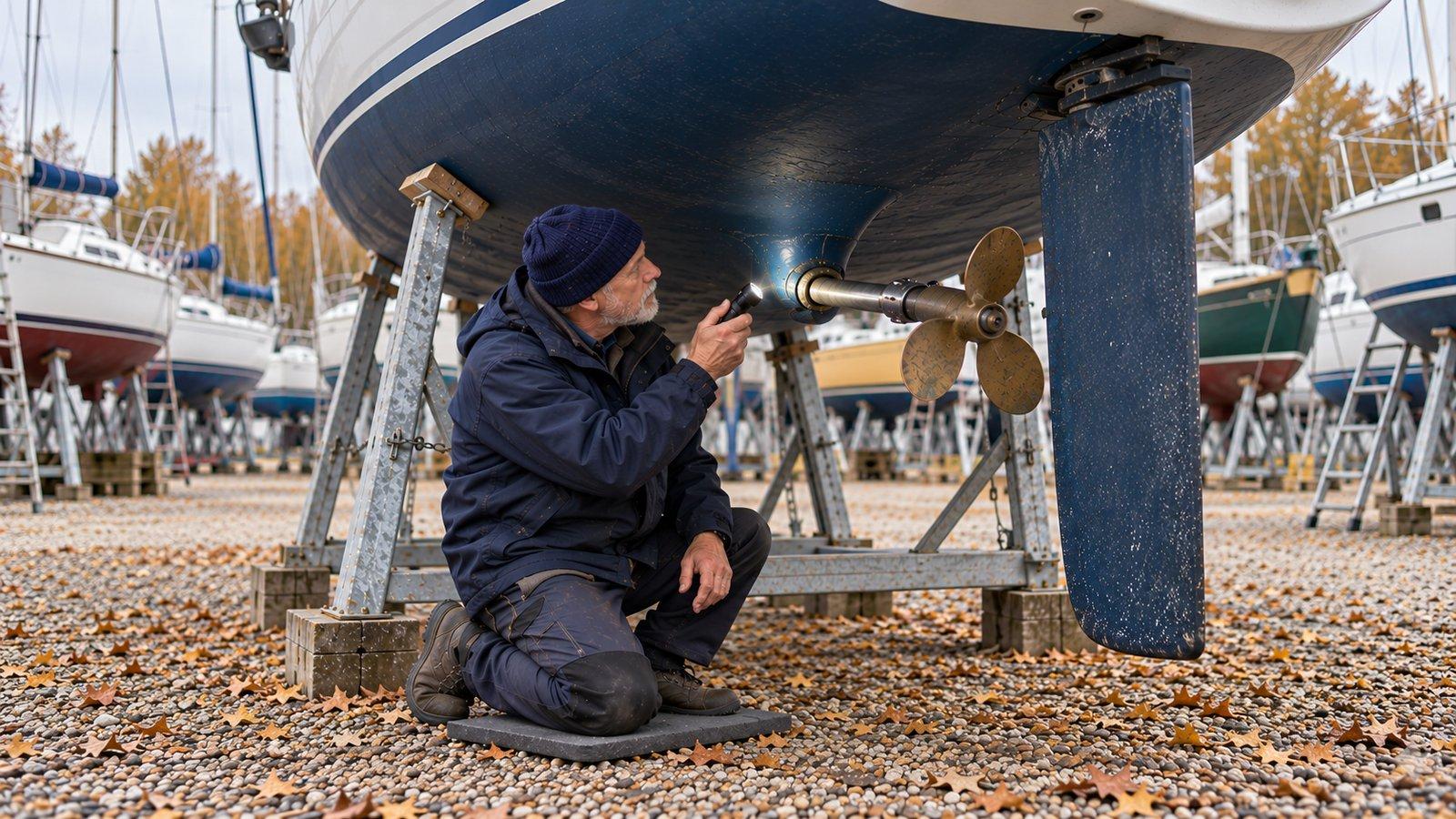
Picture a pre-purchase survey on the south coast. The buyers are a Dutch couple, keen sailors, who have agreed a price on a 36-foot sloop subject to survey. Their English is good: good enough for the pontoon, the broker's emails and the sea trial. Forty pages of survey prose, read against a reply deadline, is a different thing. So on the evening the report arrives they forward the PDF to a cousin in Utrecht, who runs it through a translation tool overnight.
By the morning they hold a version of the report that the surveyor has never seen and will never sign. They ask the broker whether "Category B" is the second-worst grade or the second-best. They open the price conversation with a gelcoat repair, and say little about the stanchion base the surveyor graded B for movement under load. The reply window keeps counting, in many sale agreements from completion of the survey, and in many of them silence counts as acceptance.
Nobody did anything wrong. The surveyor wrote a careful report, and the buyers did the sensible thing with it. Even so, the surveyor's findings reached the people relying on them through a text no qualified person checked. A report read in a second language can be misread. The professional answer is to report in the client's language and stay its author: agree the language at instruction, read every page before approving, keep figures and categories exactly as found, and say which copy governs when there are two.

The Same Duty in Any Language
A survey is a service performed with reasonable care and skill. For a private buyer the Consumer Rights Act makes that a term of the contract, and for a business client in England, Wales and Northern Ireland the Supply of Goods and Services Act does the same.1 Neither mentions language, and neither needs to. A buyer who cannot read the report with confidence cannot act on it, and whoever signs a report owns every line of it, as our post on what makes a survey report defensible sets out.
Product law offers a useful comparison. A builder placing a recreational craft on the market must supply its instructions and safety information in a set language: English in Great Britain, and in Northern Ireland, as across the EU, a language consumers can easily understand.2 That rule binds builders, and reaches no surveyor. It does show how seriously the law takes safety information being read, and a survey report carries safety information too.
Agree the Language at Instruction
The language of the report is a term of the engagement, and the time to settle it is before the survey, when the fee and scope are agreed. Three lines in the terms cover it:
- the language the report will be written in;
- whether a second copy in another language is wanted, and at what fee;
- which copy governs if two are issued.
A buyer who is asked the question at instruction rarely ends up forwarding the PDF to a cousin. A broker who knows the answer can plan the reply window around it, and brokers read survey reports closely whichever language they arrive in.
Before the first report in another language, tell the PI broker, in writing, as a change in the work the policy covers. Ask whether it responds to a report written in Spanish, to one issued to a client resident in the Netherlands, and to work done outside the UK, and read the territorial limits and jurisdiction clause with those questions in mind. The reply belongs on file with the rest of the practice's cover. Our guide to building a marine surveying practice covers PI insurance more widely.
What Stays Exactly as Found
Most of a report can move between languages. A small part of it must arrive untouched, and that part is what a surveyor checks first on reading.
The category letters stay letters, with their key. Practices define their grades in their own words, so a grade means what the report's own key says it means. Keep the letter in every copy and translate the key, and a Dutch broker, a UK underwriter and the English copy all point at the same "B" with the same definition behind it. Translated into a local word for "serious" or "moderate", a grade loses that definition. The buyers in the opening scene needed the key as much as the language. Our post on Category A, B and C defects sets out the usual definitions.
Figures, measurements and dates stay as recorded, in the reader's notation. Moisture readings, plate thicknesses, 3mm of movement at a stanchion base, the date stamp on a gas hose: each one is checked against the notes. The format matters as much as the digits. In Dutch, French, Spanish, Italian and Portuguese a comma marks the decimal, so 1,2mm is one point two millimetres and 1.200 is twelve hundred. An American reader puts the month before the day. Units are named in full where it helps (metres or feet, bar or psi), and so is the scale a moisture meter reads on.
Marine terms are checked as terms. Every language has its own words for the boat, and they are often not the obvious ones. In Dutch a stanchion is a scepter, the same word as a monarch's sceptre.3 A general-purpose tool has no particular reason to know a cutless bearing from a cutlass. The reader to trust here is someone who knows boats in that language.
Read Every Page Before Approving
Approval is the step that makes a report the surveyor's own, in any language. It means reading the whole report in the language it will be read in: the findings against the notes, each recommendation against its defect, the summary against the findings.
A surveyor who reads the language well can do this alone, and approves only what they can follow. Where the surveyor reads it less well, the report is better issued in English alone. A client who wants it translated can then commission a professional translator, and a line in writing records that the translation is theirs. In every case a short call to talk the client through the findings, with an interpreter where needed, settles most questions before they reach the price conversation.

Two Copies, One Governs
Often the client wants both. The buyers read Dutch, while their UK insurer, a lender or the broker reads English. Two copies are fine, provided each is drafted, read and approved in its own right, and each says the same thing about the other. The surveyor adds that in their own words while editing each copy, with a line in the scope and limitations such as:
This report has been issued in Dutch and in English. Where the two differ, the English text governs.
Which copy governs is agreed at instruction and written into the terms, in plain words the client can follow. The sensible choice is the language the surveyor wrote and checked with the most confidence. The line settles which text prevails where the two differ. The surveyor still answers for both, which is the reason both are read. For most UK practices that is English, and the client's copy is the one they read at the kitchen table. The reply window is short, so both copies are best issued together.
Surveying Abroad
The same questions arrive the other way round for a surveyor who practises overseas. A British surveyor on the Costa del Sol or in the Balearics, on the Algarve or in Brittany, surveys for British owners and buyers and for local ones, often in the same week. The British buyer wants English. The local owner, the local broker and sometimes the local insurer want Spanish, Portuguese or French.
For that practice the routine is one set of habits. Notes can be taken in English throughout, or in Spanish for a Spanish client, and the report comes out in the language the client reads, through the same steps: language agreed in the terms, every page read, one copy named as governing. A few local points sit alongside. Since 2021 a British surveyor working in the EU needs the right to work there and the local registrations that go with it. Rules on who may survey, and on how a report is used in a sale or a claim, vary by country. Some countries expect consumer paperwork in the national language whatever the terms say, and a court, registry or insurer may ask for a sworn translation in place of the surveyor's own copy. A local adviser is the person for these, and the PI broker's answer on work done abroad completes the picture. Language variants matter too: a client in Lisbon reads European Portuguese, and a careful reading will notice a Brazilian turn of phrase.
Back on the south coast, the Dutch couple would have had a report in Dutch, read and signed by the surveyor, an English copy for their insurer, and one line saying which governs. They still have a price to talk about. They talk about it in the surveyor's own words.
Marine Inspect writes the reports a surveyor sends to clients, from the Standard Survey Report and the Defect Schedule to the Broker Pack and the Valuation Certificate, in English (UK), English (US), Español, Français, Italiano, Nederlands or Português (Brasil): the findings, summary and recommendations in that language, with the cover, headings, defects register, dates and page numbers printed in it, from notes in English or in the chosen language. A second copy in another language is one more generation, with its credit cost shown first, and the surveyor reads, edits and approves every report before anything reaches the client. The report languages section of our features page shows a page in each language, and the Calypso Dawn sample report shows the layout they all follow.
Footnotes
-
Consumer Rights Act 2015, section 49: every contract to supply a service to a consumer, such as a private buyer, "is to be treated as including a term that the trader must perform the service with reasonable care and skill": legislation.gov.uk. Supply of Goods and Services Act 1982, section 13, the implied term "that the supplier will carry out the service with reasonable care and skill", where the supplier acts in the course of a business; since 1 October 2015 it covers contracts other than consumer contracts, and Part II of the Act does not extend to Scotland: legislation.gov.uk. ↩
-
The Recreational Craft Regulations 2017 (SI 2017/737), regulation 15, Instructions and safety information. In England, Wales and Scotland a manufacturer must ensure a product placed on the market is accompanied by instructions and safety information in English. The Northern Ireland text keeps the wording of the EU Recreational Craft Directive (2013/53/EU), "a language which can be easily understood by consumers and other end-users": legislation.gov.uk. ↩
-
Wikipedia (Dutch), Scepter, under "Scepter in andere betekenissen": "Scepters zijn een onderdeel van een open reling van een schip" (sceptres are part of a ship's open railing): nl.wikipedia.org. We found no free Dutch nautical dictionary to cite alongside it. ↩