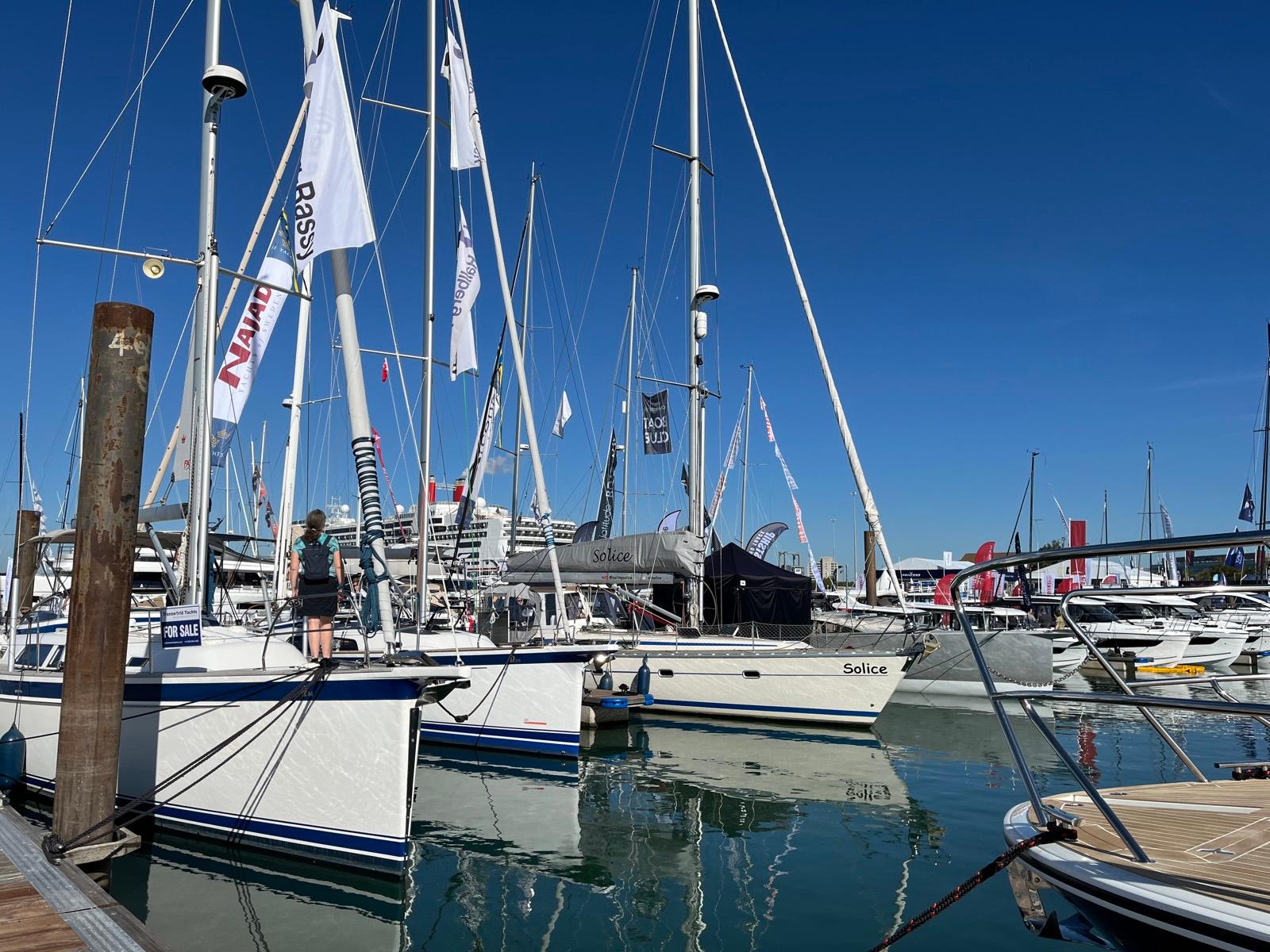
The call comes as you walk back along the pontoon. The broker says the seller has accepted your offer, subject to survey. For a minute she already feels like yours. Then the practical questions arrive. What happens now, who books what, and when do you get the keys?

Here is the road, in order, for a yacht, a motor boat or a narrowboat. The pace is set by your agreement, the yard and the season.
What "Subject to Survey" Means
Buying through a broker, you will usually sign a written sale agreement and pay a deposit, commonly around 10% of the price.1 The broker acts for the seller, and holds your deposit for both of you in a client account, kept apart from the broker's own money, until the sale completes or ends.
"Subject to survey" means you can have the boat surveyed before you are committed. The agreement sets three dates: when the survey should be done, how many days you then have to reply in writing, and how soon completion follows (the day you pay the balance and she becomes yours).
Two things are worth knowing on day one. In many agreements, silence counts as a yes: if your written reply has not reached the broker in time, the boat is treated as accepted.1 And the days often count from survey day itself, so waiting for the report or a quote uses the same days. If you need longer, ask the broker to agree a new date with the seller, in writing.
Buying privately? Royal Yachting Association (RYA) members can use the RYA's agreement for private sales, and its advice suits any agreement: check that it lets you withdraw after the survey or sea trial.2 With no broker, checking who owns the boat, whether money is owed on her and how your deposit is held falls to you, and a solicitor can help.
1. Choose Your Surveyor
The surveyor works for you, the buyer, and the choice is yours. Your broker may suggest a few names to start from. Shortlist two or three who work near the boat (a search for pre-purchase surveyors is a good start) and ask each the seven questions from our buying a boat page:
- Which professional body do you belong to?
- Do you hold professional indemnity insurance? (Cover for the advice a professional gives.)
- Out of the water, afloat, or both?
- Is a sea trial included?
- May I see a sample report?
- When will the report be ready?
- What does the fee cover? Travel, the lift-out, and rig (mast and rigging) or engine inspections can be extra.
Question six matters more than it looks, because your days to reply may already be running. How to choose a marine surveyor goes into the questions in more depth.
2. Book the Lift-Out
Most pre-purchase surveys look at the hull out of the water. In a lift-out, the yard lifts the boat with a travel hoist (a wheeled frame with slings) and stands her on the hard, the yard's area for boats ashore. Agree early who books it: you, the broker or the surveyor. The lift-out, the relaunch and the survey are usually the buyer's cost.1 Ask the surveyor how long they need her out, and book the yard to match. For a narrowboat, a dry dock or slipway takes the lift-out's place (more below).
3. Survey Day

The surveyor works through the boat: hull, deck, rig, engine and systems, as far as they can be seen and run on the day. On a fibreglass hull they will usually take moisture readings; on a steel hull, thickness readings across the plating are a central part of the survey. For a closer look at an engine or a mast, the surveyor may suggest a marine engineer or a rigger.3 A sea trial (a short trip under way, to see the engine, steering and equipment working) often follows. Ask whether it is included, and who provides the skipper and the fuel.
Whether you attend is a question for your surveyor. Some like to talk the buyer through the boat at the end of the day; others prefer to talk afterwards.
Our buying page has a list for the days before. Some items sit with the seller or the broker; your part is to check each is in hand:
- Survey date agreed with the seller or broker
- Lift-out booked with the yard
- Keys, batteries charged and lockers cleared
- Sea trial arranged, with a skipper and fuel
- Insurance ready from the day you complete
4. Read the Report
A report sets out the findings, usually with photographs, graded by priority. A common scheme uses three grades:
- Category A: a danger to the boat or the people aboard, to be put right before she is used.
- Category B: a real defect, to be put right, often within a suggested time.
- Category C: routine maintenance, or cosmetic.
A boat with some years behind her will have a list of findings, and that is normal. The grades tell you what needs attention first; a yard quote tells you what it costs. An urgent item can be quick to put right, and a less urgent one can be the larger bill. Read the section on what could not be seen or tested, too. If a finding is unclear, ring the surveyor: they know the boat now, and their view of what matters most is the best guide you have.
Category A, B and C explained goes deeper, and what to expect from a survey report walks through a report section by section. Each surveyor has their own format; for a look at one before yours arrives, here are samples for an imaginary yacht and narrowboat.
5. Reply in Writing
You reply to the broker in writing, within the days the agreement allows. Agreements usually offer these choices:1
- accept the boat as she is
- ask the seller to put specific findings right before completion
- ask for a lower price, so you can put them right yourself
- withdraw
Some agreements let you withdraw for any reason after the survey; others only for defects you had not been told about. Asking for a repair or a lower price is an ordinary part of buying a boat. If the seller says no, the sale usually ends there unless you both agree to carry on. The conversation is about what the survey found, since anything you knew of when you offered is usually in the price already. Keep to the findings and the figures, and let the broker carry it between you.
Talk to your insurer before you reply: some ask for particular findings to be put right before they will cover her. Send your reply in good time, and ask the broker to confirm they have it. If you withdraw, the deposit comes back, less any yard or survey charges you arranged and have not paid, and you pay to put the boat back as you found her.1
6. Complete, and Insure From That Day
Completion follows soon after you accept, often within seven days,1 so have the funds ready first. Before you send the balance, confirm the broker's bank details by phone on a number you already have.
If the seller agreed to repairs, ask how you will see them done: the yard's invoice, or a return visit from your surveyor. Check that the boat and her inventory are as they were on survey day. The broker gathers the documents: usually the bill of sale (which transfers ownership), any registration papers, evidence of VAT status (that VAT was paid on her, or why none is due) and, for a boat built since June 1998, the builder's Declaration of Conformity.
From completion she is yours, so insurance starts that day. Your insurer may ask to see the survey report; insurance surveys and pre-purchase surveys explains how the two differ. If she is staying on her berth, ask the marina early whether it can pass to you.
Then she's yours.
If She's a Narrowboat, or Lives Inland

For a narrowboat, or any boat kept on the canals and rivers, a few things differ.
- Out of the water. The hull goes into a dry dock (a chamber drained to leave the boat on blocks), up a slipway (a ramp she is hauled up) or out by crane. If you are asked to take her to the dock, check first that the seller's insurance covers you at the tiller.
- Hull or full survey. Some inland surveys look at the hull only. Ask which you are getting.
- The BSS certificate. A Boat Safety Scheme (BSS) examination checks an inland boat's gas, fuel and electrical installations, to reduce the risk of fire, explosion, carbon monoxide and pollution.4 You need a current certificate to license her, so check its expiry date. It sits alongside the survey; BSS examination or pre-purchase survey? explains the difference.
- Your own licence. On Canal & River Trust waters a standard licence does not pass to a new owner, and you need your own before you use her, with the BSS certificate number and an insurance cover note.5 Tell the Trust you have bought her, and ask the seller to report the sale. Other navigation authorities (the bodies that manage each waterway) set their own rules.
- Where she will live. A Trust licence asks for a home mooring or continuous cruising: a genuine journey around the network, no more than 14 days in one place. The Trust notes that may not suit work, family or school in one place, so settle it before completion.
When you are ready to choose, search for pre-purchase surveyors near the boat, or narrowboat surveyors. A free account keeps a shortlist of up to ten surveyors, a private note on each and your survey-day list, on iPhone, iPad and Android.
Footnotes
-
Practical Boat Owner, Essential boat buyer's guide: a deposit usually of around 10%, paid through the broker's client account; about 14 days for survey and sea trial; the buyer paying to lift the boat ashore. On silence as acceptance, a maritime lawyer writing in Marlin notes that agreements deeming the buyer to have accepted unless they reject in writing are more common in Europe, while most US agreements work the other way: Sale agreements for fishing boats. The clause detail (the broker acting for the seller and holding the deposit as stakeholder; reply days counted from completion of the survey; an outright rejection, or an offer to proceed if the seller repairs or reduces the price, with the sale ending if no agreement is reached; withdrawal for any reason in one form and for undisclosed material defects in the other; the deposit returned less unpaid yard or survey charges; the boat reinstated at the buyer's cost; completion within seven days of acceptance) is taken from two published broker agreements: an inland broker's conditional agreement and a yacht broker's standard terms. The joint BRBA and ABYA Sale and Purchase Agreement, launched in March 2025 as an industry standard for brokers, is available to members only, so it is not quoted here (British Marine announcement). Your own agreement governs; ask your broker or a solicitor about its terms. ↩ ↩2 ↩3 ↩4 ↩5 ↩6
-
Royal Yachting Association, Boat buying made easy: the RYA's Agreement for Sale and Purchase of Second Hand Boat for members' private sales, a broker's own agreement for sales through a broker, and the advice to check that you can withdraw after a survey or sea trial. ↩
-
Practical Boat Owner (above) notes that a survey does not reach hidden areas, the top of the rig or detailed engine checks, so separate inspections may be needed; Motor Boat & Yachting suggests an independent engineer's check on the machinery may be prudent: How to buy a used boat. ↩
-
The Scheme's stated aim: Boat Safety Scheme. ↩
-
Canal & River Trust, Boat licensing, buying and selling FAQs: standard six- and 12-month licences are not transferable; a licence is needed before the boat is used on the Trust's waters; an application needs a valid BSS certificate (its number) and an insurance cover note; buyer and seller each tell the Trust about a sale; continuous cruising means a genuine journey around the network without staying in one place for more than 14 days, and may not suit someone with commitments such as work, family or school in one place. Rivers-only and Gold licences follow different rules, set out on the same page. ↩